There are numerous highly impressive Bechtel projects under construction worldwide. Bechtel stays busy in places where the stakes are high and the margins for error are thin. Right now, that includes LNG export terminals on the Gulf Coast, semiconductor fabrication facilities, and long-term defense infrastructure projects. Many of these sites employ thousands of workers and run on schedules measured in years, not months. If you want a snapshot of where heavy industrial construction is heading, Bechtel’s current backlog is a solid place to look.
About Bechtel
Bechtel is one of the largest engineering and construction firms in the world, with roots dating back to 1898. The company is best known for taking on projects that push the limits of logistics, labor coordination, and engineering. Tasks such as building power plants, LNG export terminals, mining operations, and transportation systems are common for Bechtel. And it’s projects of this sort that really test you in terms of logistics, coordinating teams and engineers, and getting everything just right.
Today, Bechtel’s work reflects where governments and private owners are spending real money. Energy security, keeping manufacturing in the home country, and building infrastructure that will last are what’s driving new construction projects. As a result, you’re seeing a lot of investment in building new semiconductor plants and LNG facilities—with a lot of that funding coming from government and long-term agreements to buy the power they produce. While defense projects don’t always draw public attention, they provide consistent, long-term work for Bechtel’s construction teams.
Looking ahead to 2026, the types of projects Bechtel’s taking on suggest that contractors and builders will be under real pressure to find skilled workers, sort out supply chain issues, and keep their sites safe. And for all the trades and project managers out there, Bechtel’s sites often serve as a benchmark for judging how large projects are put together—staffed, scheduled, and run.
10 projects in the works from Bechtel
1. Port Arthur LNG Phase 1
Location: Jefferson County, Texas, U.S.
Expected completion: 2027–2028
Typology: LNG liquefaction and export terminal
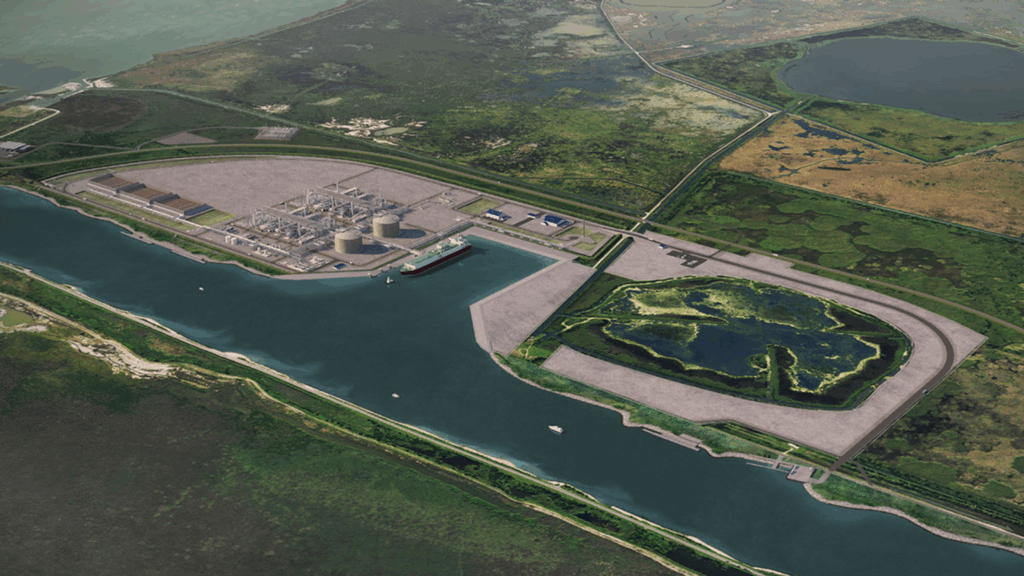
The Port Arthur LNG project is one of the most significant Bechtel projects under construction on the U.S. Gulf Coast, and Bechtel is leading the engineering, procurement, and construction work under a fixed-price contract. Phase 1 includes two natural gas liquefaction trains and two large LNG storage tanks with a combined nameplate capacity of about 13 million tonnes per year for export. Work on Phase 1 has already moved a large volume of earth, driven piles for foundations, and begun installing structural steel and piping systems to support the liquefaction and loading facilities on a very tight schedule.
Phase 2 is progressing under a separate EPC contract, which will bring two additional liquefaction trains and significantly increase storage capacity, effectively doubling the terminal’s output upon completion. But this is just part of a larger build-out that will make the Gulf Coast an even bigger player in the global gas trade and help US supplies reach farther into world markets. Construction on these massive sites requires meticulous planning to integrate all key components—berths for marine traffic, cryogenic systems, heavy machinery, and behind-the-scenes utility work—on a single site.
2. Rio Grande LNG
Location: Brownsville, Texas, U.S.
Expected completion: 2027+
Typology: LNG liquefaction and export complex
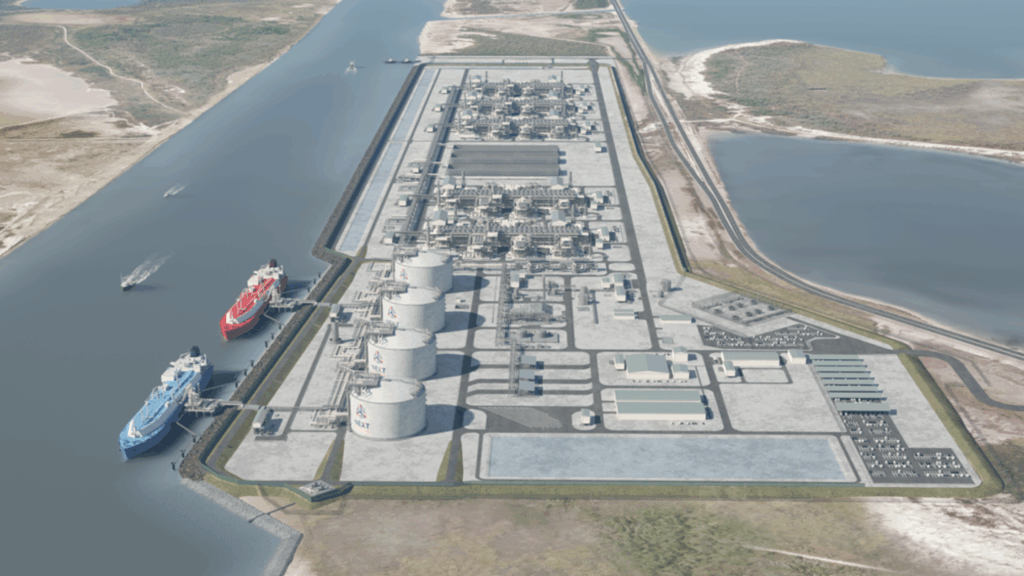
Rio Grande LNG is one of the largest energy infrastructure projects underway in the U.S., and it’s impressive for both its scale and its reach into export markets. The site sits on 984 acres along the Brownsville ship channel in South Texas, where Bechtel is building the first phase under a lump-sum EPC contract with NextDecade. Phase 1 includes three liquefaction trains, two storage tanks capable of storing large amounts of LNG, and a marine berth large enough to handle those huge carriers when it’s finished. When it opens, it should be able to churn out about 18 million tonnes of LNG a year—enough gas to keep millions of houses and businesses going.
But that’s just the start: additional liquefaction trains and export infrastructure are already in the pipeline, suggesting that Rio Grande LNG could get even bigger over time. Future trains will use the same tried-and-tested design as the original, allowing engineers and builders to continue using the same basic plan. With its storage, processing, and berth space, Rio Grande LNG is a vital link between US gas and customers worldwide.
3. Semiconductor plant facility
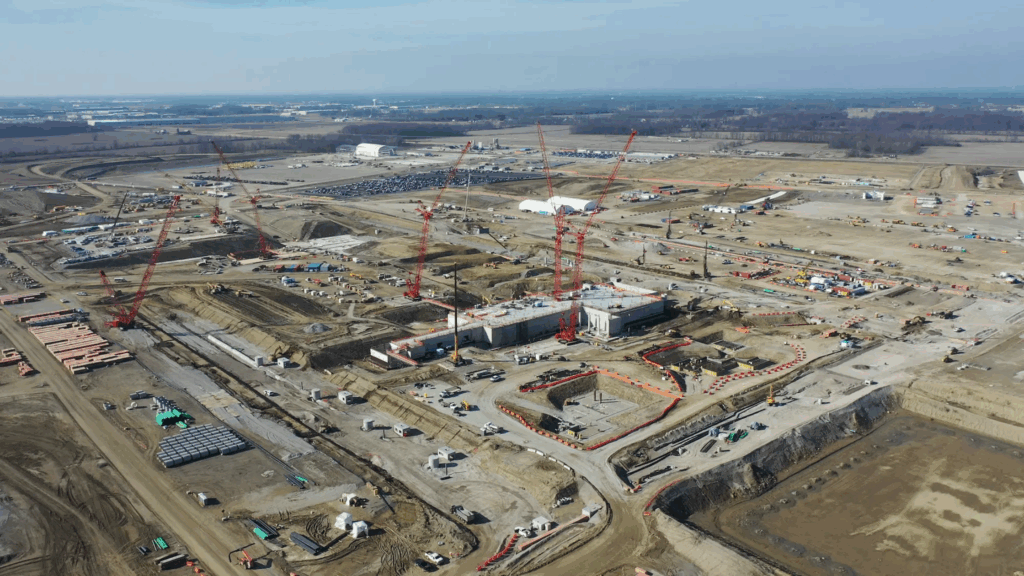
Location: New Albany, Ohio, U.S.
Expected completion: Late 2026
Typology: Semiconductor manufacturing facilities
This semiconductor campus in central Ohio is one of the largest manufacturing build-outs currently underway in the US. Bechtel is responsible for designing and building Phase 1, a 2.5 million-square-foot project that includes approximately 600,000 square feet of cleanroom space. These buildings can operate with tightly controlled air quality and temperature; if even a speck of dust enters the system, it can ruin an entire batch of wafers. The scale is hard to miss, with construction materials comparable to those used in major skyscraper projects and structural systems designed to support highly sensitive production environments.
But it’s not just the buildings themselves that are a big deal; the project also requires extensive underground and utility infrastructure, including large power feeds, chilled-water systems, and extensive conduit laid in advance. This means working closely with tool vendors is a high priority—the precision manufacturing equipment is usually installed late in the construction timeline, so there’s little leeway if things don’t go as planned.
4. Corpus Christi Liquefaction Stage 3
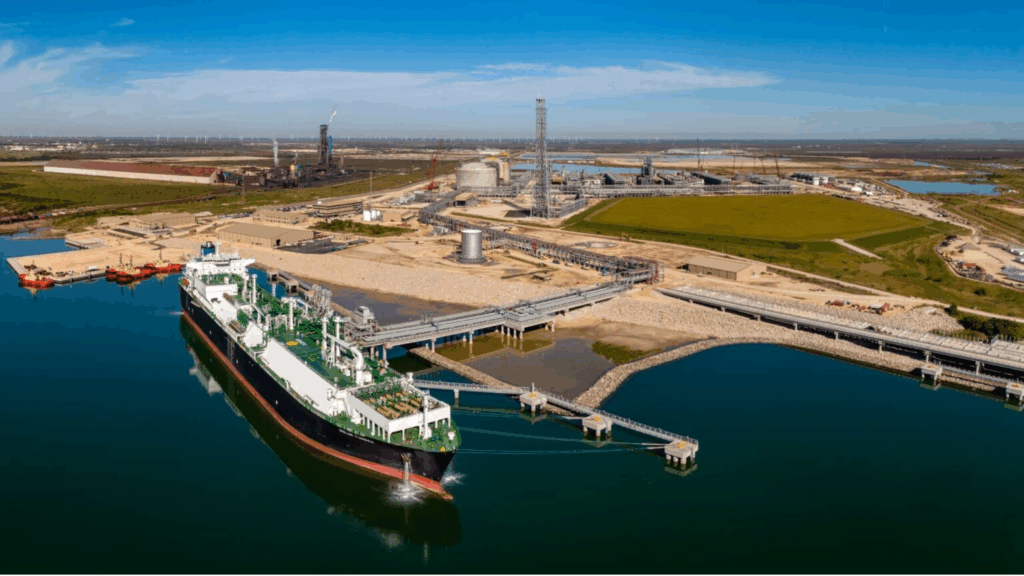
Location: Corpus Christi, Texas, U.S.
Expected completion: Late 2020s
Typology: LNG liquefaction expansion
The Stage 3 expansion at the Corpus Christi Liquefaction facility builds on earlier phases that came online in 2019 and 2021. Bechtel is delivering this phase under an EPC contract that adds seven mid-scale liquefaction trains, increasing the terminal’s capacity by more than 10 million tonnes of LNG per year. The work here involves bringing in motor-driven refrigeration systems, a new boil-off gas compression system, and all the supporting infrastructure into the existing storage and marine loading facilities. That’s all happening on the same 1,000-acre site, with a logistical challenge thrown in because it still has major gas pipelines coming in from all over that feed into the Gulf Coast export terminals.
Executing Stage 3 alongside active liquefaction operations requires tight coordination across every trade. To manage this, they need to bring in Stage 3 of the project while the liquefaction operations are still operating at full steam. It is a challenge to coordinate all the different elements—construction teams must figure out how to get all their equipment in place, integrate with the existing systems, and bring the new equipment online—all without shutting down the part of the terminal that produces LNG. Bechtel and the terminal owner have taken an approach that allows them to bring in new trains block by block, increasing capacity without taking everything offline at once. And that enables them to spread out the capital investment and keep the exports rolling in.
5. Sabine Pass LNG ongoing construction
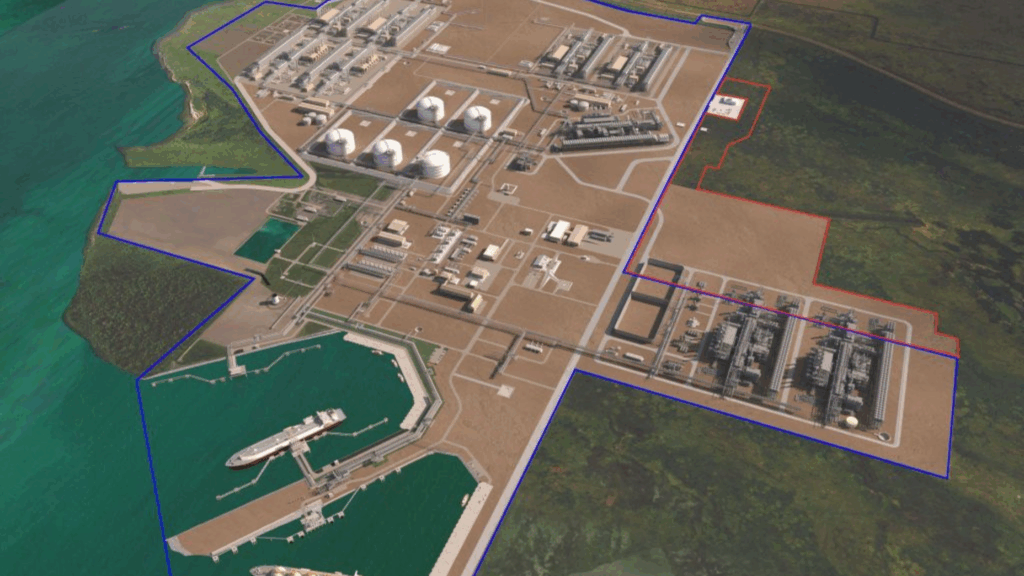
Location: Cameron Parish, Louisiana, U.S.
Expected completion: Ongoing
Typology: LNG export terminal
The Sabine Pass Liquefaction project is one of the earliest and most significant Bechtel projects under construction, and its footprint sets the standard for large-scale LNG export terminals in the U.S. Bechtel partnered with Cheniere Energy to convert the original receiving terminal in Cameron Parish, Louisiana, into a world-class liquefaction and export facility that now stretches across more than 1,000 acres with six operational liquefaction trains and multiple storage tanks. That capacity boost brought capacity to about 30 million tonnes per year, making Sabine Pass a real linchpin in US LNG export activity.
The site itself is impressive, with deepwater berths and an extensive network of pipes that connect to major natural gas pipelines, so it’s as much about getting the product out to tankers as about turning the gas into LNG on site. Construction has been underway for several years, and each new train and berthing facility requires coordination with existing systems. Even though some of the earlier phases are complete, there’s still plenty of activity going on at Sabine Pass. It remains a live project with planning and infrastructure work still to be done.
6. Advanced battery manufacturing facilities
Location: United States (confidential client sites)
Expected completion: 2025–2026
Typology: Battery manufacturing plants
Bechtel is managing the construction of advanced battery manufacturing facilities in the United States that support the production of cells and components for electric vehicles and energy storage systems. These are sophisticated production facilities with complex electrical networks and multiple layers of mechanical systems that must work together seamlessly before the team can even begin installing machinery.
These facilities are part of a broader push to build battery capacity inside the U.S., reducing dependence on overseas suppliers and supporting automotive and grid-scale energy storage industries. Before heavy construction begins on future battery plants, Bechtel is conducting engineering studies to optimize layout, utilities, and construction sequencing to ensure a smoother, more predictable final build. For construction workers and project managers, these types of projects pose a challenge: industrial construction that requires a delicate balance between heavy-duty electrical and mechanical work and strict cleanliness and environmental controls.
7. Hanford Waste Treatment and Immobilization Plant (WTP)
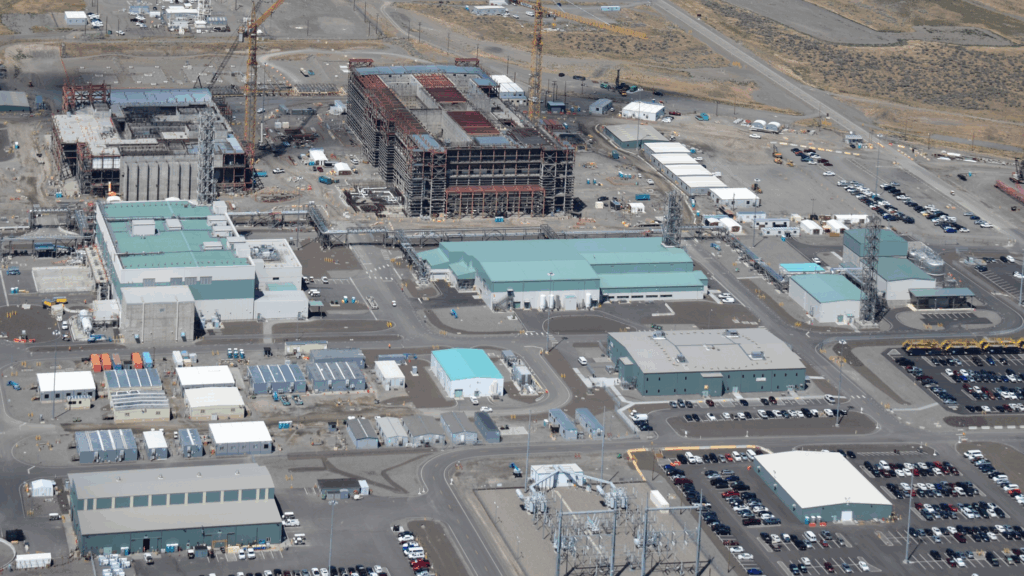
Location: Hanford, Washington, U.S.
Expected completion: Commissioning ongoing, phased deliveries into the late 2020s
Typology: Environmental remediation / nuclear waste treatment plant
The Hanford Waste Treatment and Immobilization Plant is a massive Bechtel project under construction with one of the toughest engineering challenges in North America. At the Hanford site, once home to the plutonium production complex of the Manhattan Project, hundreds of millions of gallons of legacy radioactive and chemical waste sit in underground tanks. The U.S. Department of Energy selected Bechtel’s team to design, build, and commission a multi-facility complex capable of turning this waste into stable glass through a process called vitrification, which mixes tank waste with glass-forming materials and cools it to a solid.
What makes Hanford WTP stand out is both scale and uniqueness. There’s no exact precedent for this level of waste treatment plant, so every major system—conveyors, melters, high-efficiency filtration, process piping, and analytical monitoring—must be designed and built by collaborating teams that can adapt to change and respond to new data from commissioning tests. Hanford shows how industrial construction can intersect with environmental remediation and long-term stewardship, giving trades and project leaders a chance to work on one of the most technically demanding builds in the U.S. today.
8. Cold Creek Solar project
Location: Texas, U.S.
Expected completion: 2028
Typology: Utility-scale solar and energy storage
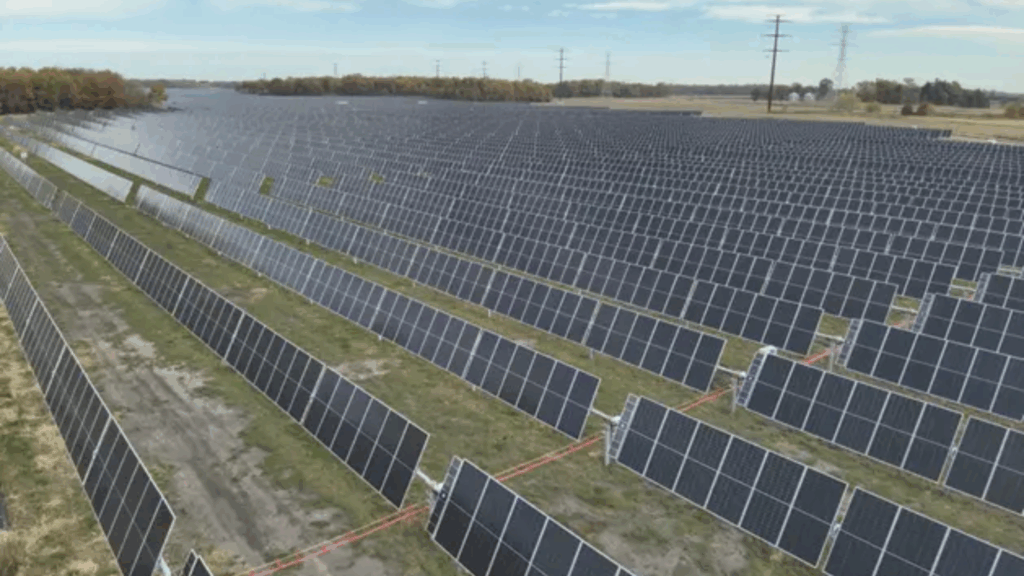
The Cold Creek Solar project is a large-scale project that will deliver approximately 430 MW of solar generation capacity to the Electric Reliability Council of Texas grid, using more than 850,000 solar modules across rural west-central Texas. Bechtel is providing engineering, procurement, and construction services for the array and its support facilities, including a 340 megawatt-hour battery energy storage system that stores excess power for delivery during peak demand. The pairing of generation and storage means that even when the sun’s not shining, the site can still dispatch energy, and that’s fast becoming a major priority for the Texas grid’s reliability. The facility will connect to the ERCOT transmission infrastructure and bring significant new capacity online when it begins commercial operation in 2028.
Construction involves large-scale site work, panel installations, battery system assembly, and high-voltage grid connections. Civil crews are grading and preparing the expansive site footprint before mechanical and electrical trades install racking, inverters, and storage equipment. The project is expected to create more than 500 jobs, providing training and employment opportunities for local craft professionals and regional suppliers. This build is Bechtel’s second project with Doral Renewables in Texas and its fifth utility-scale solar project in the state—a sign that renewable energy work is now part of the heavy industrial backlog alongside traditional energy and infrastructure work.
9. Sentinel missile launch infrastructure
Location: Multiple U.S. states (UT, VA, CA, others)
Expected completion: Phased work into the 2030s
Typology: National defense infrastructure and ICBM ground system
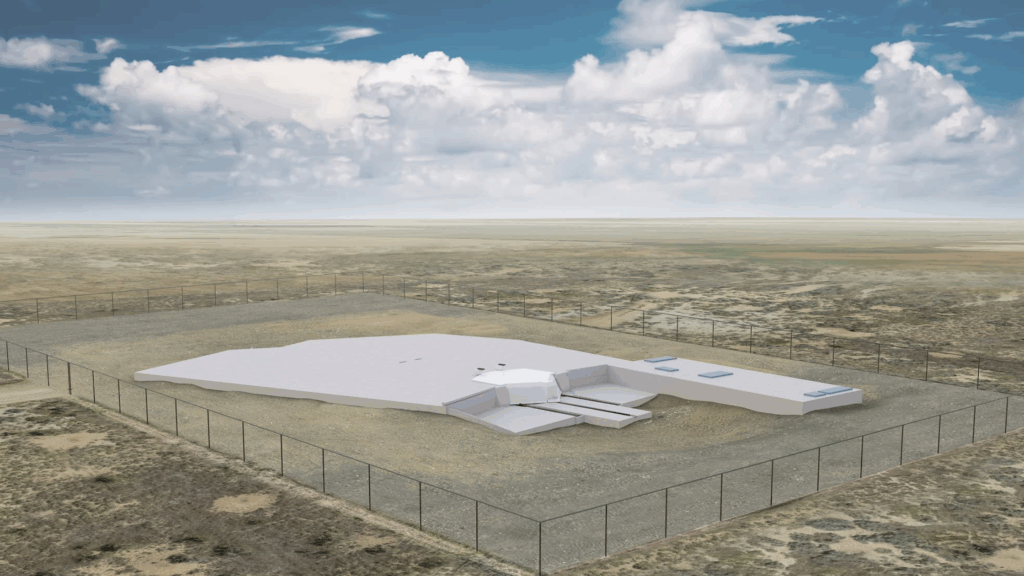
The Sentinel program is a long-term Bechtel project to modernize the United States’ intercontinental ballistic missile infrastructure. Bechtel is part of a nationwide team with Northrop Grumman and other defense firms to design and build the ground systems that support the LGM-35 Sentinel, the next-generation land-based missile system for the U.S. Air Force. Current work focuses on the Engineering and Manufacturing Development phase, which includes building and testing launch infrastructure at sites in Roy and Ogden, Utah; Reston, Virginia; and Vandenberg Space Force Base, California.
This infrastructure must interface with command-and-control systems, training facilities, and future operational silos scattered across the central U.S. landscape. The work also includes laying out test and demonstration sites to validate infrastructure designs and construction methods before fielding full operational capabilities. Because this project touches national security systems and secure sites, strict protocols govern everything from site access and construction sequencing to document control and regulatory compliance.
The contract spans decades and dozens of locations, and Bechtel’s construction work must align with long-range military requirements, safety controls, and highly coordinated scheduling with other contractors. The program’s phased approach means construction teams move among design, site preparation, buildings, and specialized infrastructure as systems evolve and mature alongside test data.
10. Tengiz Third Generation Project
Location: Tengiz, Kazakhstan
Expected completion: Ongoing
Typology: Oilfield expansion and mechanical-electrical construction
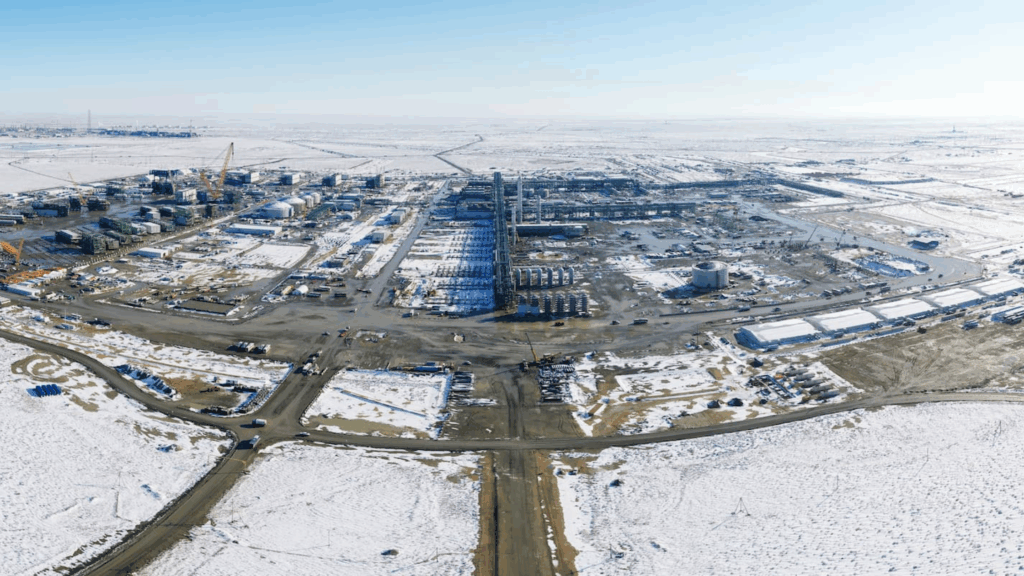
At the Tengiz oilfield in Kazakhstan, the Third Generation Project (3GP) is a major undertaking within the overarching Future Growth Project – West Package for Tengizchevroil LLP. Bechtel and ENKA, through their joint venture Senimdi Kurylys (SK), are handling the mechanical, electrical, and instrumentation work, from pipe fabrication to the installation of major processing equipment across the site. This includes upgrading facilities, boosting crude shipment capacity, doubling down on diesel and fuel storage, and overhauling pipelines—all key elements of optimizing one of the world’s most productive oilfields.
The Tengiz oil field itself is an enormous operation spanning thousands of square kilometers, and 3GP is just one part of a decades-long effort that began with earlier debottlenecking and sour-gas injection phases. Bechtel has been here for nearly 30 years, working on multiple upgrades and helping bring more crude oil and associated products into global markets. Working on 3GP means coordinating massive fabrication yards, site-wide utilities, and industrial installations that must operate seamlessly with ongoing oil production and future upgrades.
Final thoughts
Looking at Bechtel’s current projects under construction, one thing stands out: these are not short-term plays. LNG terminals, semiconductor factories, defence facilities, and massive energy projects are all built to last for decades, and the construction phase is reshaping local labor markets and supply chains. For construction workers and project managers, Bechtel sites are often the benchmark for safety standards, workforce size, and complex job organisation.
These projects also offer a glimpse into where the industry is investing. Energy security, domestic manufacturing, data infrastructure, and renewables are all getting sustained investment, which means there’s steady demand for skilled construction labor.
If you want to keep track of how these megaprojects affect hiring, schedules, and construction practices, subscribe to the Under the Hard Hat newsletter. We break down what these builds mean long after the headlines fade.