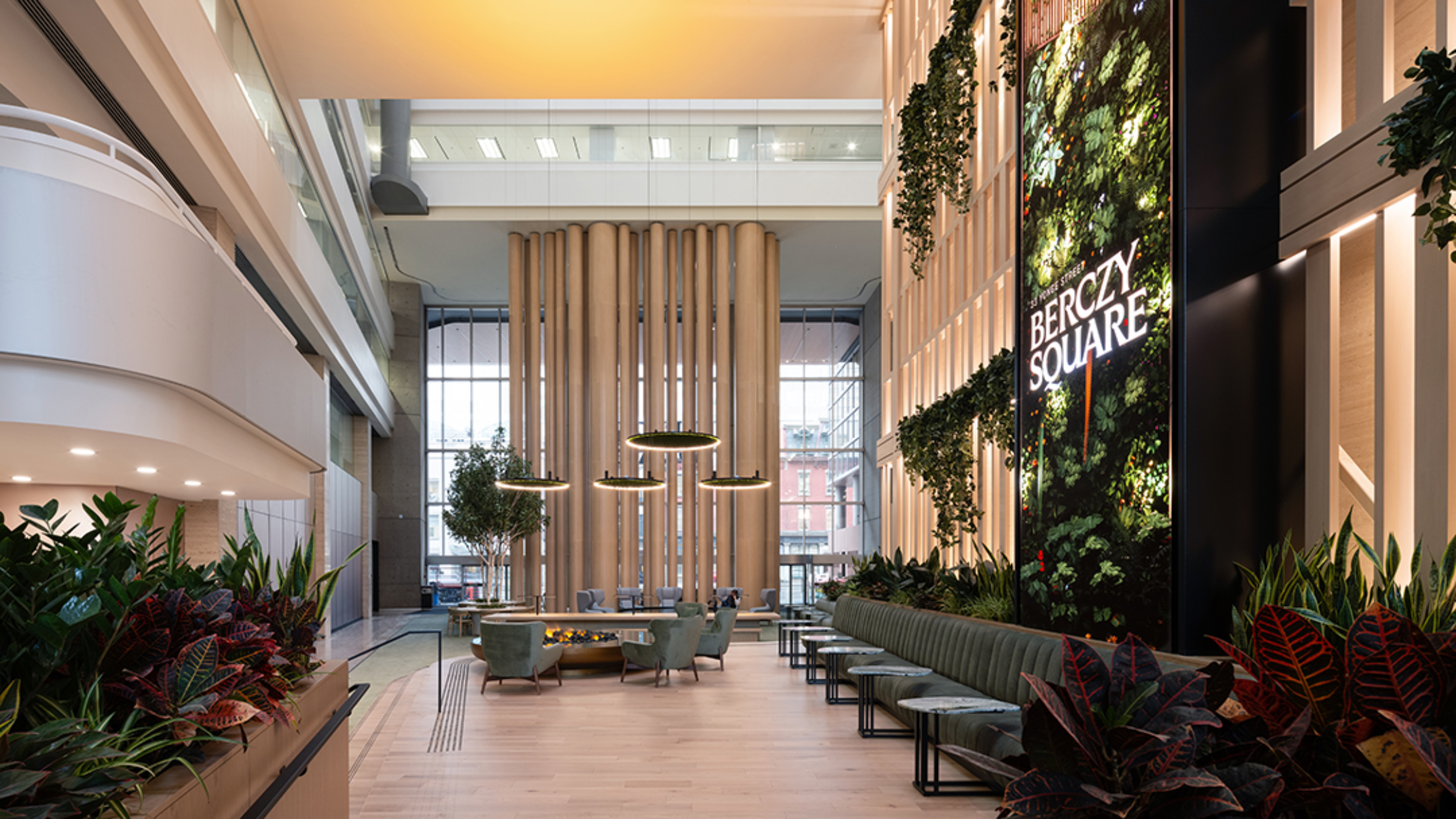
GWL Realty Advisors (GWLRA) recently unveiled a massive renovation of the lobby at Berczy Square, turning the iconic building at 33 Yonge Street into a destination, not just a pass-through. By blending people-centric design with deep respect for the building’s original architecture, this project shows how modern office spaces can evolve to meet the needs of today’s workforce.
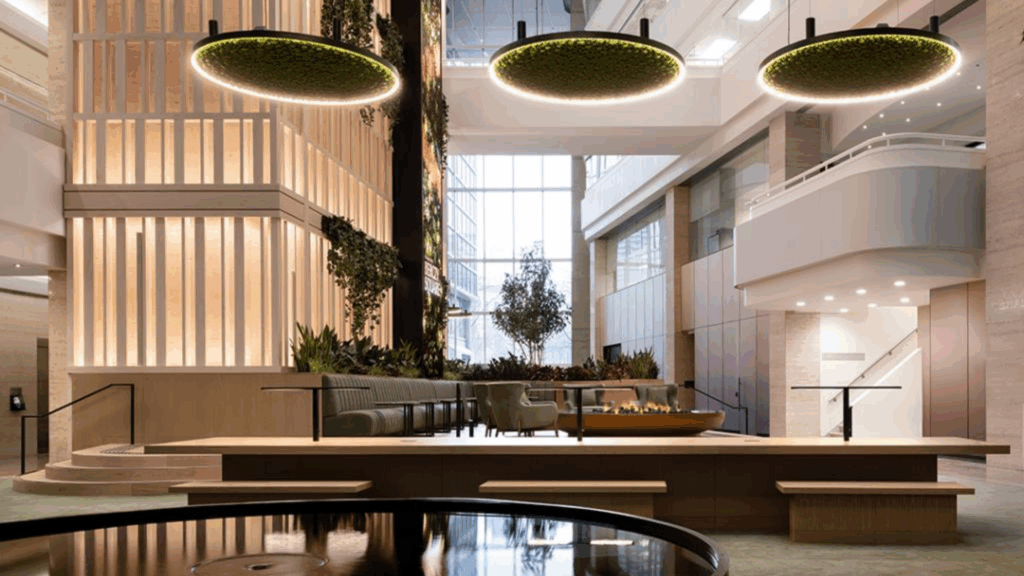
When you walk into the new lobby, the first thing you notice isn’t just the 90-foot-tall LED screen or the hanging moss pendants. Instead of a typical gut-and-rebuild approach, the design team at DIALOG used soft-touch interventions to ensure the building’s original architectural details remained intact. For example, a new nine-story trellis structure was added to wrap the elevator bay, but it was carefully placed to preserve the original Travertine walls. This approach honors the history of the 13-story atrium while adding the warmth and greenery that modern workers crave.
A 100% Canadian transformation
In a unique move for a project of this scale, every material used in the renovation is 100% Canadian. From the natural stone at the front desk to the expansive wooden deck in the center of the lobby, the materials were sourced locally to ground the space in its Ontario environment. This choice supports local industry and creates an authentically Torontonian space.
Sourcing materials from our own backyard is part of a bigger shift toward regional supply chains. It is a smart way to cut down on lead times and avoid the headache of global shipping delays or sudden import tariffs. By sticking with Canadian quarried stone and timber, the team at Berczy Square also made a huge dent in the project’s carbon footprint. They wiped out the thousands of travel miles that usually come with shipping luxury finishes from overseas. High-end imports often carry a massive prestige tax, but this lobby proves you can achieve LEED-standard results while keeping that investment in the Canadian economy.
The goal was to move away from a sterile office feel and toward a Zen-like landscape that invites people to slow down and look up. “We call this design concept Pause because it invites people to… take a moment to breathe,” said Alison McNeil, Partner and Interior Designer at DIALOG. “We amplified the openness of the original atrium by layering it with new materials and uses tailored to the needs of today’s employees. Purposeful spaces to work, wait, or relax draw inspiration from Ontario’s natural landscape and materiality, reinforcing a sense of place.”
Destinations, not desks
The renovation at Berczy Square is part of a larger trend where office buildings must “earn the commute” by offering more than just a desk and a chair. “Tenant needs and expectations are evolving, and the best office buildings are adapting,” said Devan Sloan, Vice President of Asset Management and Leasing at GWLRA. “That means real innovation in workplace design and amenities.”
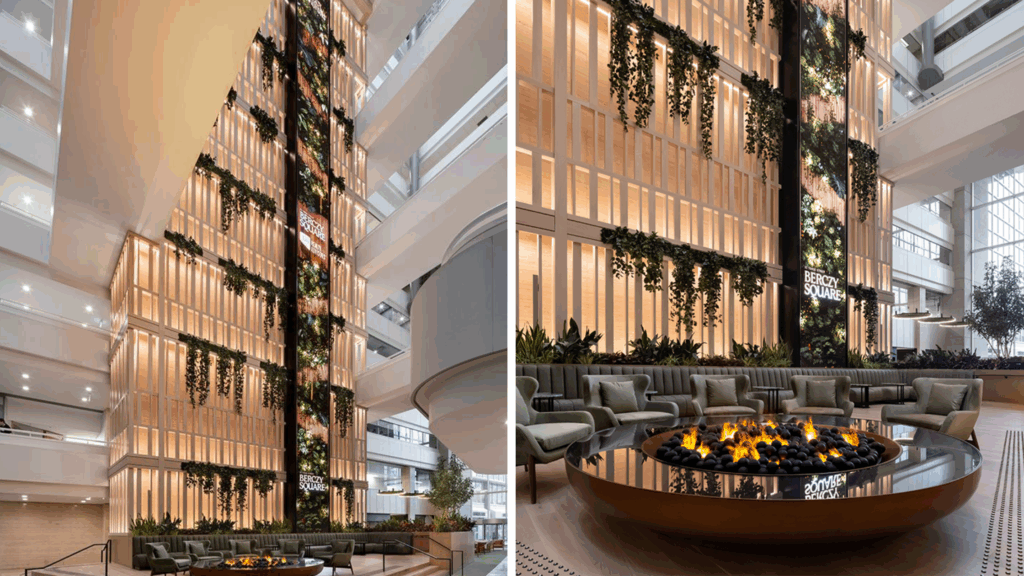
The space now functions as a social hub with features designed for wellness and connection:
- Digital art: A monumental LED screen displays atmospheric art by Montreal’s Gentilhomme, acting as a “heartbeat” for the building rather than a space for ads.
- Natural elements: The lobby includes tree-like columns, a reflecting pool, a vapor-based fire pit, and live plantings that bring the outside in.
- Modern amenities: The building now offers two coffee shops, five new restaurants, outdoor patios, and a new facility with bike storage and showers for active commuters.
“[Destinations, not desks] means moving away from measuring success by occupancy or square footage per person and instead asking, what experiences do we want to enable?” said McNeil. “Great offices are designed around moments: team collaboration, mentorship, innovation, and social connection. When people come in, the space should feel purposeful, energizing, and aligned with their organization’s values.”
What this means for builders and developers
The work at Berczy Square shows exactly how the office market has changed. It is not just about leasing square footage anymore; it is about selling an experience. For builders and developers, the lobby cannot just be a boring security desk or a place to walk through on the way to the elevator. Physical offices are now in a head-to-head battle with the comfort of a home office. This means every inch of a common area needs to offer a “commute-worthy” reason for people to actually show up.
For the AEC industry, a modern lobby is now a major leasing tool. It is a physical expression of a company’s brand that focuses on wellness, biophilic design, and digital integration. By moving away from cold, empty marble and toward the Zen-style town square seen at 33 Yonge Street, developers are creating spaces that encourage the kind of social connection you just cannot get on a Zoom call. This is exactly where the future of office design is headed.
Want to keep up with the latest in AEC news and office design trends? Subscribe to our newsletter today!