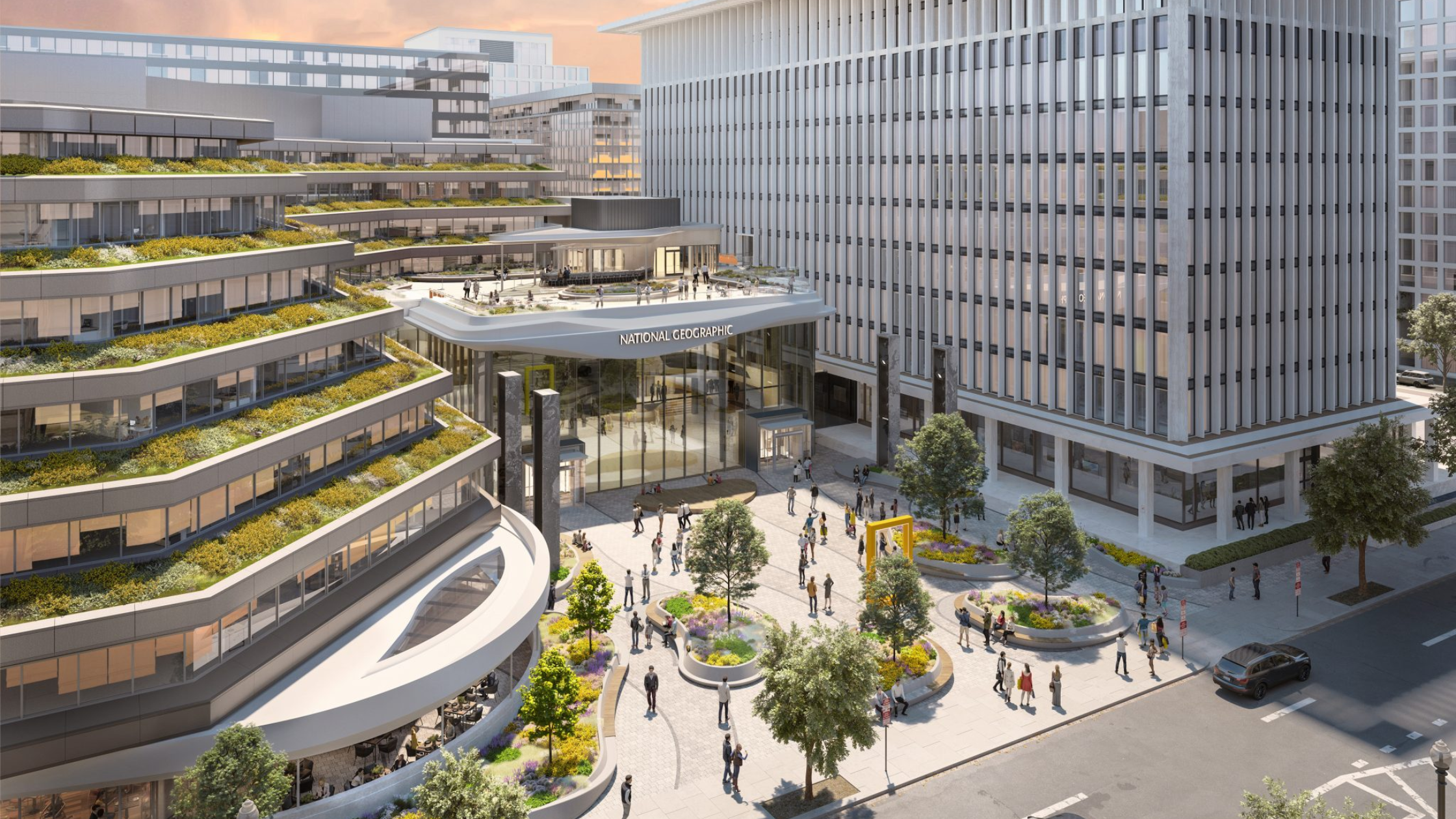
The National Geographic Museum of Exploration is currently transforming a dense corner of Washington, D.C. into a world-class hub for discovery. This project is a complex construction effort that balances high-tech immersive design with the tight physical constraints of an active urban site. This article examines how crews are putting this together and how the industry is shifting toward experience-driven construction.
Most commercial builds focus on floor plates and efficiency, but this project is built from the ground up to tell a story. The Museum of Exploration features a massive new pavilion that serves as a glass-walled entry point, connecting three existing buildings into one cohesive campus. This requires a level of coordination far beyond a standard office renovation. Crews have to integrate heavy structural work with delicate, high-tech systems that will eventually power immersive exhibits.
In a typical build, you might install the HVAC and electrical systems and call it a day. Here, those systems must be perfectly hidden to keep the focus on the visitor experience. The build is a hybrid, combining the restoration of historic structures with a futuristic glass-and-steel pavilion that pushes the limits of modern engineering.
The logistics of a zero-lot-line site
The Hickok Cole design features a stunning glass pavilion, but getting those panels on-site was a masterclass in just-in-time delivery. Because there is no room to store glass or steel on a sidewalk in D.C., the team has to coordinate with the city for specific pull-in windows. This means the crane is already in the air when the truck turns the corner. If you’re facing a similar urban build, note that your logistics manager is just as important as your site supervisor.
Managing structural surgeries
The most difficult part of this project is the connection points; taking a modern, flexible glass pavilion and tying it into a rigid, historic masonry building. This is where 3D laser scanning becomes a lifesaver. By creating a digital twin of the existing walls, the crews can pre-fabricate the steel connectors so they fit the first time. This avoids the need for on-site welding or cutting, which is a major fire risk in an old building, not to mention a massive time-waster.
Sustainability and advanced materials
The project team is pushing for high-level sustainability certifications; that focus is evident in every material choice. The new pavilion is wrapped in high-performance glass that lets in plenty of natural light without affecting the interior temperature. This takes a massive load off the heating and cooling systems, a big win for long-term energy efficiency.
The crew is also prioritizing recycled materials and low-carbon concrete wherever possible. One of the most interesting systems is the 45,000-gallon cistern tucked into the bottom level of the parking garage. It captures rainwater for irrigation and graywater reuse, which helps the building stay off the local water grid as much as possible. Even the demolition phase was handled with care, as the team diverted most of the waste from landfills to recycling streams. These are core requirements of the contract that force the team to track every single shipment of material and every ton of waste that leaves the gate.
The rise of experience-driven spaces
The Museum of Exploration shows exactly where the AEC industry is heading. We are moving away from the era of static, boxy buildings and shifting toward spaces designed to create a feeling. For the contractors and engineers on the ground, this makes the daily work much more technical. Beyond following a set of blueprints, there must be an understanding of how the plumbing, lighting, and acoustics all sync to create a very specific atmosphere.
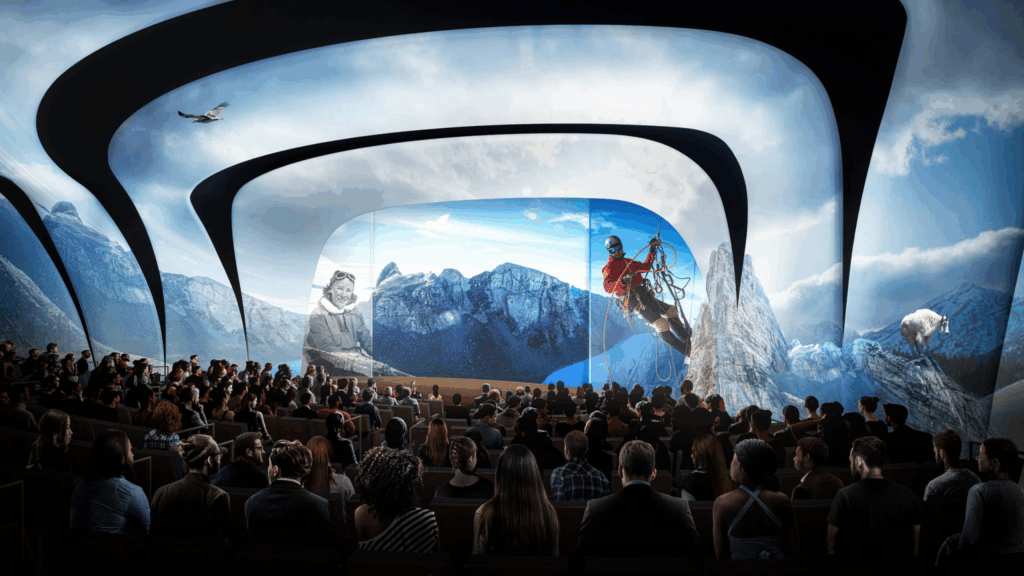
This shift requires a more collaborative approach between the designers and the trades on the ground. When you’re building for an experience, a small mistake in how a glass panel is aligned or how a light fixture is recessed can ruin the effect for thousands of future visitors. The National Geographic build shows that when the trades and the designers are in sync, you can pull off something truly incredible even in the middle of a cramped city.
The takeaway for AEC leaders
The museum proves that the future of construction is about digital coordination. Experience-driven spaces require you to hide miles of data cables and HVAC ductwork within thin architectural elements. Without early, heavy-duty BIM coordination in the pre-construction phase, those experiences could result in a series of change orders and delays.
For contractors, this signals a growing pipeline of experience-driven builds. Museums, cultural centers, civic spaces, and mixed-use developments are increasingly being designed around experience rather than function. The coordination and expectation challenges that come with a build like the National Geographic Museum of Exploration are becoming the baseline. Contractors who gain experience and familiarity with this kind of work now are in a stronger position to bid on what’s coming down the pipeline.
Experience-driven builds are raising the bar for coordination, precision, and sustainability. For more coverage on the projects, technologies, and trends shaping how complex builds are delivered, subscribe to the Under the Hard Hat newsletter.