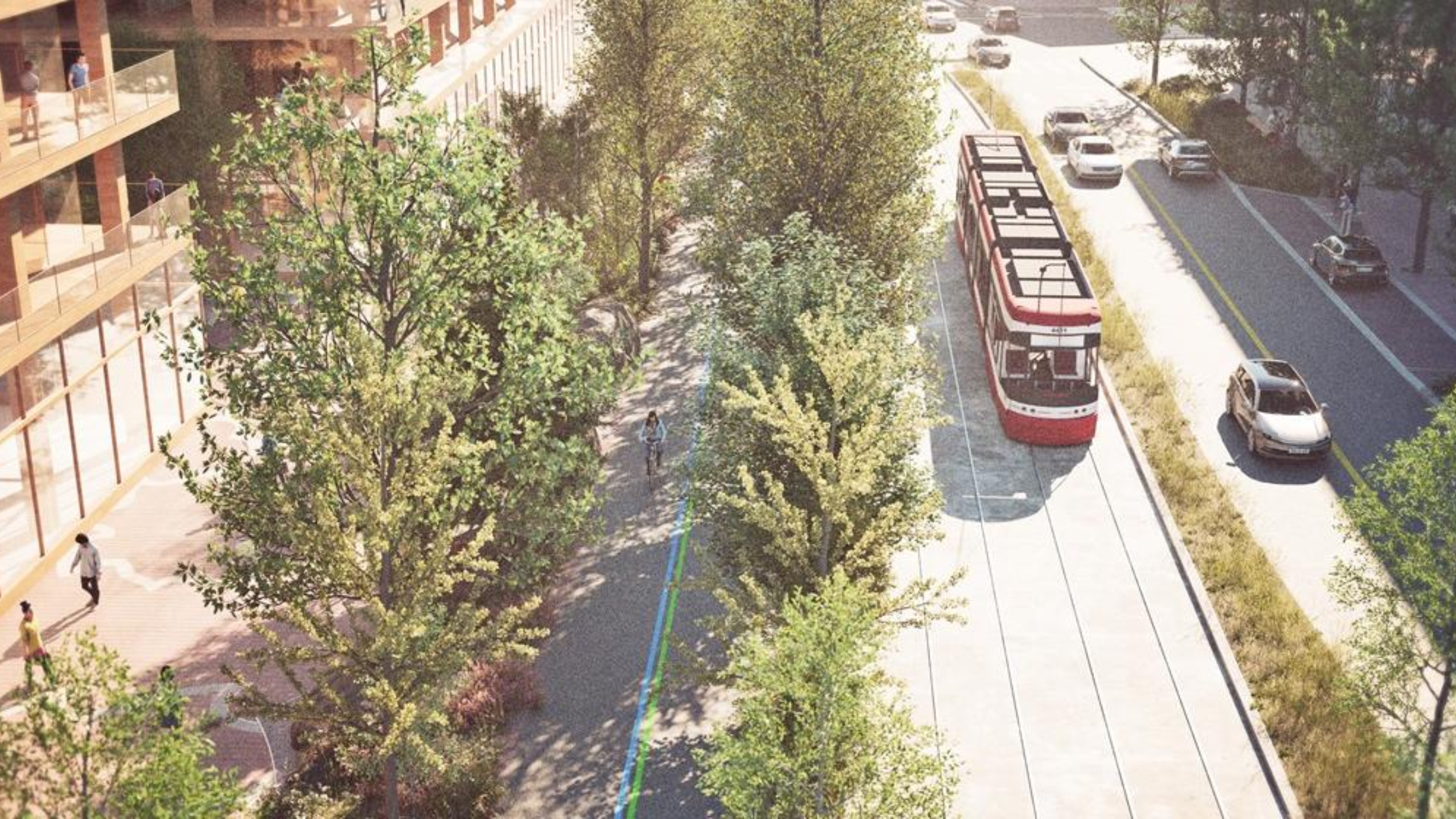
Ask around any jobsite in the GTA and the same question keeps coming up: where is steady work going to come from over the next few years? Toronto’s Waterfront East LRT delivers a very clear solution. This line is set to run from Union Station through East Bayfront and into the Port Lands, with robust public funding support and direct links to the planned Waterfront East redevelopment. This isn’t just a transit build. It’s linked to tens of thousands of planned housing units and mixed-use projects that depend on that line moving forward. That’s why contractors are paying attention—this is a long runway, not a one-off project.
What the Waterfront East Transit project entails
The Waterfront East Transit project is a planned light rail extension running east from Union Station through the East Bayfront and into the Port Lands. It follows Queens Quay and connects areas that have been difficult to develop at scale. On the surface, it reads like a standard LRT job—track installation, utility work, stations, and road reconstruction.
But the real story sits beside the alignment. The City of Toronto and its partners have tied this line directly to waterfront redevelopment. The Port Lands and East Bayfront will introduce tens of thousands of new residential units over time, with some forecasts reaching 100,000 units. However, the area will be largely worthless to potential developers without access to public transportation. But with that in place, the timelines for real progress accelerate, and a host of previously slow-going projects suddenly gain traction. This is what makes this project very interesting to watch.
Why contractors are paying attention
Transit work brings a burst of civil activity. Crews come in, complete the build, and move on. This project doesn’t stop there. Once the line is in place, developers can move ahead with projects that have been waiting on access. That includes high-rise residential, mixed-use buildings, retail, and supporting infrastructure along the same corridor. It creates a layered pipeline.
You might start with underground work tied to the LRT, which leads to foundations for nearby towers. From there, interior trades, fit-outs, and long-term maintenance work follow as buildings fill up. Instead of a single contract, it becomes a sequence of work tied to one area.
How public funding is steering where work happens
One of the biggest shifts right now is how coordinated public spending is shaping demand for construction. The Waterfront East LRT isn’t being funded in isolation. It has the backing of municipal, provincial, and federal funds, all of which are focused on preparing the waterfront land for housing. This alignment sends a strong signal to developers that they’re taking the waterfront seriously, and it reduces the uncertainty that normally holds up new projects, so, in theory at least, these projects can now move faster with a more realistic timeline.
What’s also striking is the close relationship between transit funding and increases in the housing supply in cities like Toronto. With all the pressure being put on Toronto to pack in more density, and with transit links being a mandatory requirement for getting major developments approved, the impact is pretty clear: If a site can’t get connected to a transit line, then its chances of moving forward plummet.
Infrastructure-first development is becoming standard practice
Toronto is putting a lot of stock into building the right infrastructure to support its expansion. Funding for public projects is being funneled in from all three levels of government—municipal, provincial, and federal—and it’s all aimed at unlocking new housing opportunities. Transit is at the top of the list, and once a new line opens, development tends to follow. That means contractors need to rethink the way they approach the market. Rather than jumping at every isolated development project that comes their way, they’d be wise to keep an eye on where the infrastructure dollars are going. The areas receiving the most investment often become long-term work zones.
As transit access spreads into areas like the Port Lands and the East Bayfront, you’re starting to see a whole lot more development happening. That’s bringing a steady stream of projects—residential buildings, mixed-use skyscrapers, and public works projects—all clustered along the route. Contractors need to look at this a bit differently. It isn’t just about securing the big LRT contract—it’s about understanding the sequence of work that comes after it. Early on, there’s civil work and getting services in place; then comes vertical construction, and eventually ongoing maintenance of the buildings themselves.
What this means for your pipeline
If you’re planning work beyond the next couple of years, this is the type of project to track early. Start with the corridor. Look at the land in the Port Lands and East Bayfront. Watch which developers are active and when servicing work begins—water, sewer, and roads usually move ahead of vertical builds. That’s your signal.
Getting in early improves your chances of staying involved as projects roll out in phases. There’s also a workforce angle. Long-term activity in one area can reduce travel time, stabilize crews, and help with retention. That matters in a market where skilled labor is still tight.
Projects like Waterfront East are essentially about where cities like Toronto will grow next. They point to the areas where building demand is likely to cluster, which then has a big effect on hiring, equipment usage, and the partnerships that form. The waterfront in Toronto is on the verge of a big change, and the transit line is just the starting point.
If you want to keep track of where work is heading next—and how projects like this translate into real opportunities—join the Under the Hard Hat newsletter.