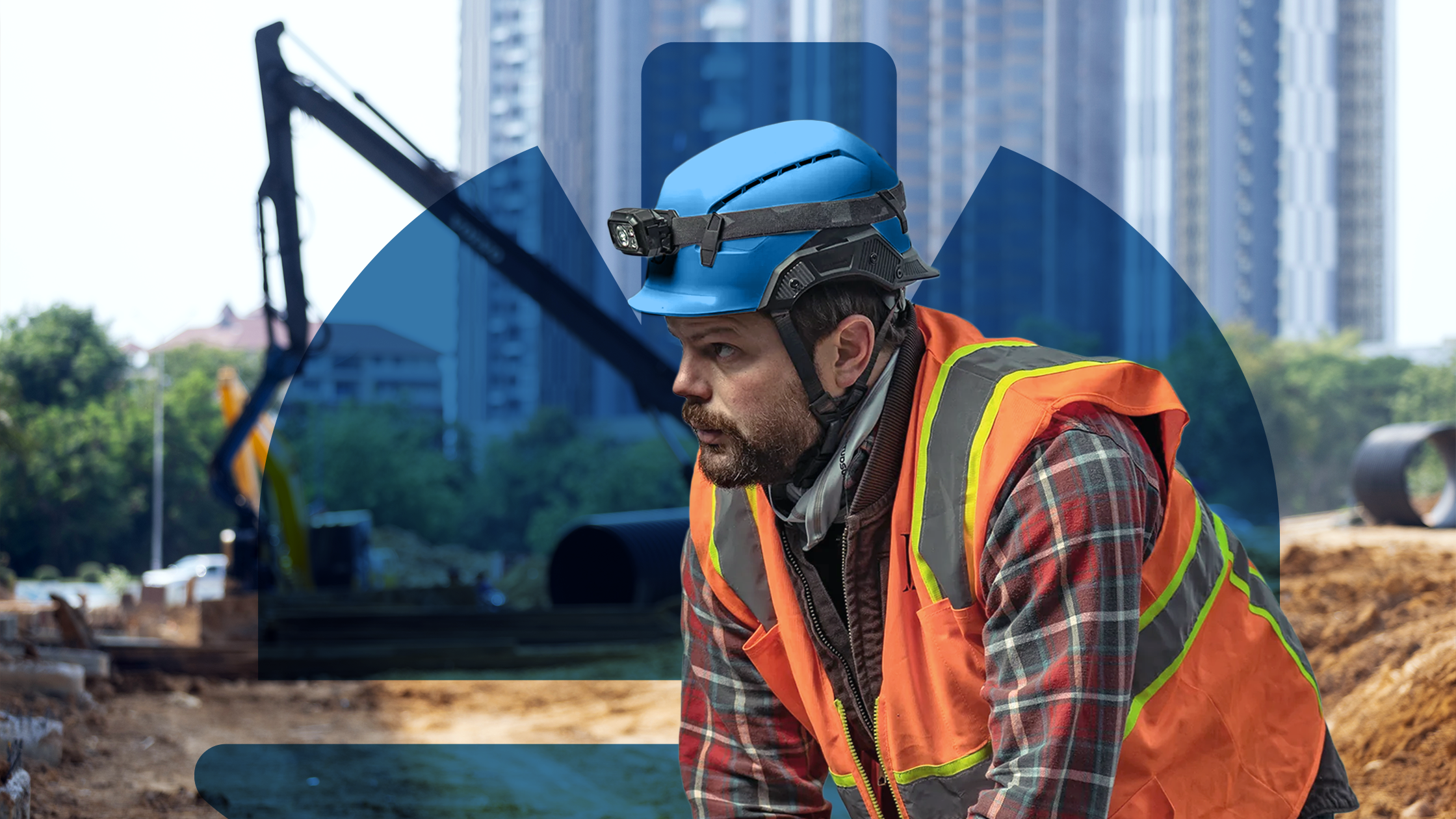
Staying safe on a busy job site is about more than just wearing a hard hat; it’s also about having a plan that protects you from the unexpected. This guide breaks down the best ways to prevent head injuries in construction, from using smart site layouts to picking the newest high-tech safety helmets. We will show you how to build a layered safety strategy so every member of your crew can head home healthy at the end of the shift.
Why head injuries occur on construction sites
Construction is a high-speed environment where heavy materials and human beings often cross paths. While we all know a hard hat is part of the uniform, understanding the “why” behind head injuries is the first step toward stopping them.
The danger of impact
Even a small bump on the head can be much more serious than a simple bruise. Recent industry data shows that Traumatic Brain Injuries (TBIs) account for 25% of all construction fatalities. A minor strike from a falling bolt or a quick trip on a flat surface can cause a brain injury that leads to long-term disability. In the trades, these injuries are especially serious because they can affect your balance, memory, and your ability to work for years to come.
Common hazard sources
The Fatal Four is a term safety experts use to describe the most dangerous hazards on a site, and “Struck-By” incidents are a major part of that list. According to CPWR data, these are the leading causes of head injuries:
- Falling objects: Tools or materials dropped from heights, like a hammer falling from a scaffold.
- Flying debris: Small pieces of wood, metal, or nails launched by power saws and nail guns.
- Swinging loads: A crane load that sways out of control or a piece of heavy machinery swinging its arm.
- Slips and falls: Simply losing your footing on a wet or uneven surface and hitting your head on the ground or a piece of equipment.
Environmental and task-specific risk factors
Certain spots on a job site are much riskier than others. Elevated work is the biggest red flag; the higher you are, the more gravity becomes a hazard for anything (or anyone) below. Congested sites in tight city spaces also increase the risk because there is less room to move away from moving machinery or swinging loads.
Working near crane operations or on multi-level scaffolding requires extra focus, as these tasks involve many overhead moving parts. Unsecured tools are another silent risk; a screwdriver left on a ledge might not seem dangerous until a slight vibration sends it downward.
Engineering and administrative controls before PPE
The best way to prevent a head injury is to ensure the hazard never reaches the worker in the first place. In the safety world, we call this the Hierarchy of Controls. While helmets are important, they should be your last line of defense, not your first.
Elimination through planning and design
The most effective safety step is Prevention through Design (PtD). This means designing out hazards before boots even hit the ground. By reviewing a project during the planning phase, engineers and architects can make changes to eliminate overhead risks.
- Smart sequencing: Avoid scheduling crews to work directly underneath each other. If a team is installing HVAC on the fourth floor, the ground-level landscaping team should be relocated to another part of the site.
- Prefabrication: Building sections of a project on the ground and then lifting them into place with a crane reduces the amount of time workers spend at heights where they might drop tools.
- Permanent features: Designing buildings with higher parapet walls (at least 42”) or built-in toe-boards can act as a permanent shield against falling objects throughout the life of the building.
Physical barriers and exclusion zones
If you can’t remove a hazard, you must build a wall between it and your workers. Engineering controls like barriers and nets are vital for high-traffic job sites.
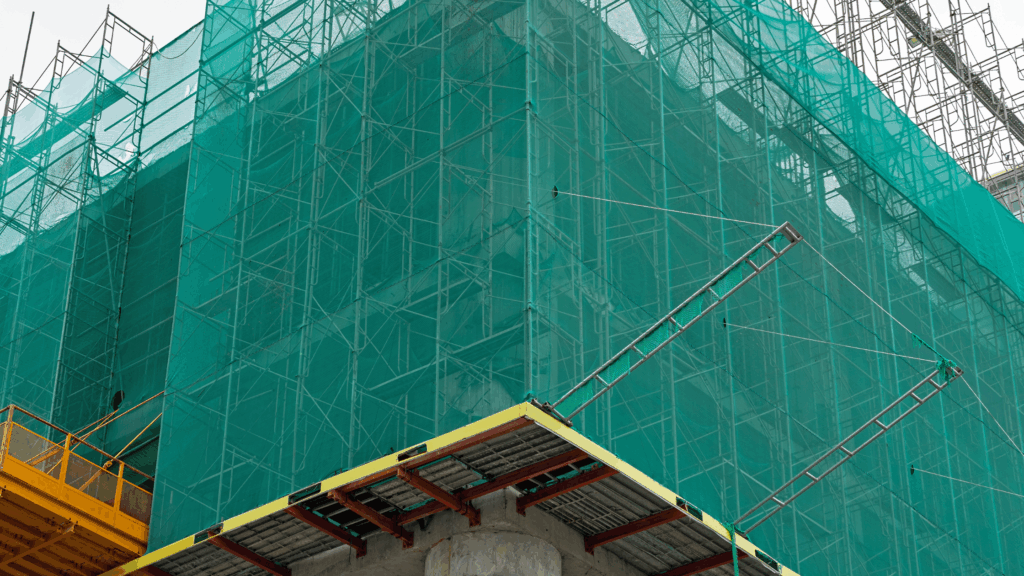
- Toe-boards and netting: Every scaffold and elevated platform should have toe-boards that are at least 3.5” high. This stops a kicked tool or loose bolt from sliding off the edge. Adding debris netting provides an extra layer of protection for smaller items.
- Exclusion zones: Often called no-go zones, these are areas directly beneath active hoisting or overhead work. Using physical barriers like fences or heavy-duty tape keeps unauthorized people out of the fall zone.
- Pedestrian pathways: Clearly marked and covered walkways allow workers to move safely through the site, even when work is happening above them.
Administrative policies and communication
Administrative controls focus on how we work and how we talk to each other. These rules and systems ensure that everyone on-site is aware of the risks at any given moment.
- Stop-work authority: Every worker, regardless of role, should have the authority to stop work if they see an unsecured load or an overhead hazard.
- Coordinated communication: For crane operations, using dedicated radio channels and spotters is essential. The operator should never swing a load over a worker’s head, and spotters should verify the path is clear before every lift.
- Daily tailgate briefings: Start every morning with a quick hazard check. Talk about where the overhead work is happening that day and remind the crew about exclusion zones. These short talks keep safety at the front of everyone’s mind.
Personal protective equipment and selection best practices
If engineering and administrative controls are not enough to eliminate a risk, personal protective equipment (PPE) becomes your final line of defense. In 2026, the industry is moving away from the old-school hard hat toward more advanced safety helmets that offer better protection during a fall.
Choosing the right type of head protection
The biggest change in recent years is the shift to Type II safety helmets. While the classic hard hat has been around for decades, it was mostly designed to protect you from a hammer falling straight down on your head. Modern job sites now require protection that handles more than just vertical drops.
- Type I vs. Type II: A Type I helmet only protects the very top of your head. A Type II helmet is designed to protect against lateral impacts. This means if you fall and hit the side of your head on a beam, or if something strikes you from the back, a Type II helmet has the extra padding needed to absorb that force.
- The chin strap: Modern safety helmets come with integrated chin straps. These are vital because they keep the helmet on your head if you trip or fall. A traditional hard hat often falls off the moment you lose your balance, leaving your head completely unprotected during the actual impact with the ground.
- Electrical classes: You also need to choose the right class based on the electrical risks of your specific task:
- Class G (General): Tested at 2,200 V. Good for most general construction.
- Class E (Electrical): Tested at 20,000 V. Essential for electricians and those near high-voltage lines.
- Class C (Conductive): Offers no electrical protection. These are often vented to keep you cool, but they should never be used near live wires.
Fit, inspection, and maintenance protocols
A helmet only works if it is in good shape. Because the materials in a helmet can break down over time from sunlight and chemicals, you need to maintain a regular habit of checking your gear.
- Daily inspection: Before you put it on, look for cracks, dents, or chalking (where the plastic looks dull and powdery). Flex the shell slightly; if it makes a cracking sound, it is time for a new one. Check the suspension straps to make sure they aren’t frayed or torn.
- The five-year rule: Most manufacturers recommend replacing the entire helmet every five years, even if it looks fine. The plastic becomes brittle over time. If the helmet takes a significant impact, replace it immediately, even if you can’t see any damage.
- Storage: Never leave your helmet on your vehicle’s dashboard. Extreme heat and UV rays from the sun will weaken the shell in just a few weeks.
Complementary protective gear
Head safety is often about preventing the accidents that lead to head strikes. Using accessories that integrate directly with your helmet can keep your hands free and your focus on the task.
- Integrated face shields: These protect your eyes and face from flying debris without interfering with the fit of your helmet.
- Mounted hearing protection: Ear muffs that click into the helmet slots are more comfortable for long days and make sure you don’t lose your earplugs.
- Headlamps: Clipping a light directly to your helmet is safer than holding a flashlight while climbing a ladder or working in a dark crawlspace.
Training, supervision, and worker behavior
Safety gear and site rules only work if the crew believes in them. Building a strong safety culture means moving beyond basic orientations and making head safety a part of the daily conversation.
Head-safety-focused training programs
Effective training should happen more than once a year. While most workers know how to put on a helmet, modern training modules need to dig deeper into the why and how of head protection.
- Struck-by awareness: Training should teach workers how to identify the line of fire. This includes understanding the swing radius of a backhoe or the potential fall path of a tool dropped from a scaffold.
- Beyond the basics: Modules should cover the specific tech in a Type II helmet, such as how to properly tension the chin strap so the helmet stays put during a fall.
- Near-miss reporting: A crucial part of training is teaching workers that reporting a close call is just as important as reporting an injury. If a bolt falls and misses someone, it is a warning that the site layout needs to change.
Supervisor and leadership role
Supervisors set the tone for the entire site. If the person in charge treats head safety as a suggestion, the crew will too.
- Model the behavior: Leaders should be the first to adopt modern Type II helmets. When a supervisor wears proper protection, it sets the new standard for the team.
- Walk-around safety audits: Rather than just checking boxes, supervisors should conduct active look-up tours. During these walks, they should look for unsecured tools at heights or workers accidentally wandering into exclusion zones.
- Tool-box talks: Use these short morning meetings to tell real stories about how a helmet saved a life or how a near-miss led to a better safety barrier.
Encouraging reporting and near-miss tracking
In 2026, many sites are using digital tools to track safety data in real time. These systems make it easy for any crew member to flag a hazard.
- Digital reporting apps: Instead of filling out a long paper form, workers can use a phone app to snap a photo of a hazard, such as a missing toeboard, and report it in seconds.
- Flagging close calls: By tracking where near-misses happen most often, management can see patterns. If five near-misses occur near the same material hoist, it indicates that the exclusion zone needs to be larger or the barriers need to be higher.
- Continuous improvement: This data should be shared with the whole crew. When workers see that their reports lead to real changes on the site, they are much more likely to keep looking out for each other.
Monitoring, review, and continuous improvement
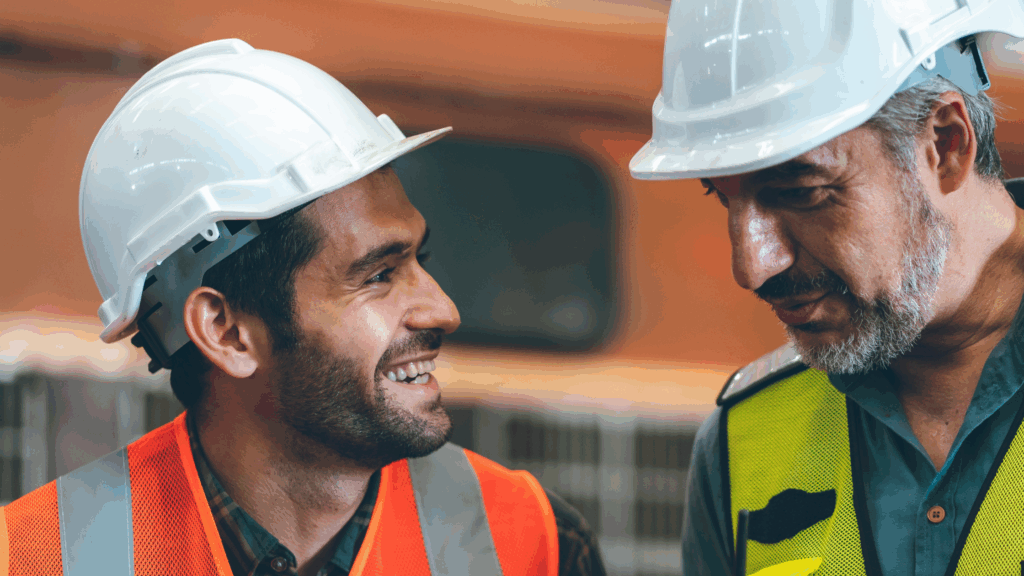
Even with the best planning and gear, a construction site is always changing. Staying safe requires a constant cycle of checking what is working and fixing what isn’t. In 2026, we have more tools than ever to help us stay one step ahead of hazards.
Investigating incidents
When a head injury or a close call happens, the goal of an investigation should not be to find someone to blame. Instead, you need to look for the root cause. Many accidents are labeled as human error, but they often start with a problem in the site layout or a failure in equipment.
For example, if a worker is struck by a falling tool, don’t just ask why they weren’t looking up. Ask why the tool wasn’t tethered, why there was no debris netting on the scaffold, or why the work was scheduled directly above a walkway. By fixing these deeper issues, you prevent the same accident from happening to someone else.
Emerging tools for 2026
Technology is rapidly changing how we monitor head safety. These smart tools act like an extra set of eyes and ears for the crew.
- Smart helmets: Modern smart helmets have built-in sensors like accelerometers and gyroscopes that detect sudden jolts or falls in real time. If a worker is struck or collapses, the helmet can automatically send an SOS alert with their exact location to the site office.
- AI surveillance: Many sites are now using AI-powered cameras that can read the job site. These systems can automatically flag when a worker enters an exclusion zone or is missing their helmet. Instead of a supervisor having to watch every camera feed, the AI sends a notification the moment it sees a safety risk.
Bottom line
Preventing head injuries is a layered strategy. It starts with a smart design that removes hazards and ends with a crew that wears the right gear every single day. When you combine top-tier tech with a culture where everyone feels comfortable reporting near-misses, you create a site where safety is truly a team sport.
Remember, your gear is your last line of defense, but your awareness is your first. Stay sharp, look out for your teammates, and make sure every head on your site is protected.
Want more job site safety tips and the latest equipment reviews? Subscribe to our newsletter today to get the newest UTHH articles delivered straight to your inbox.