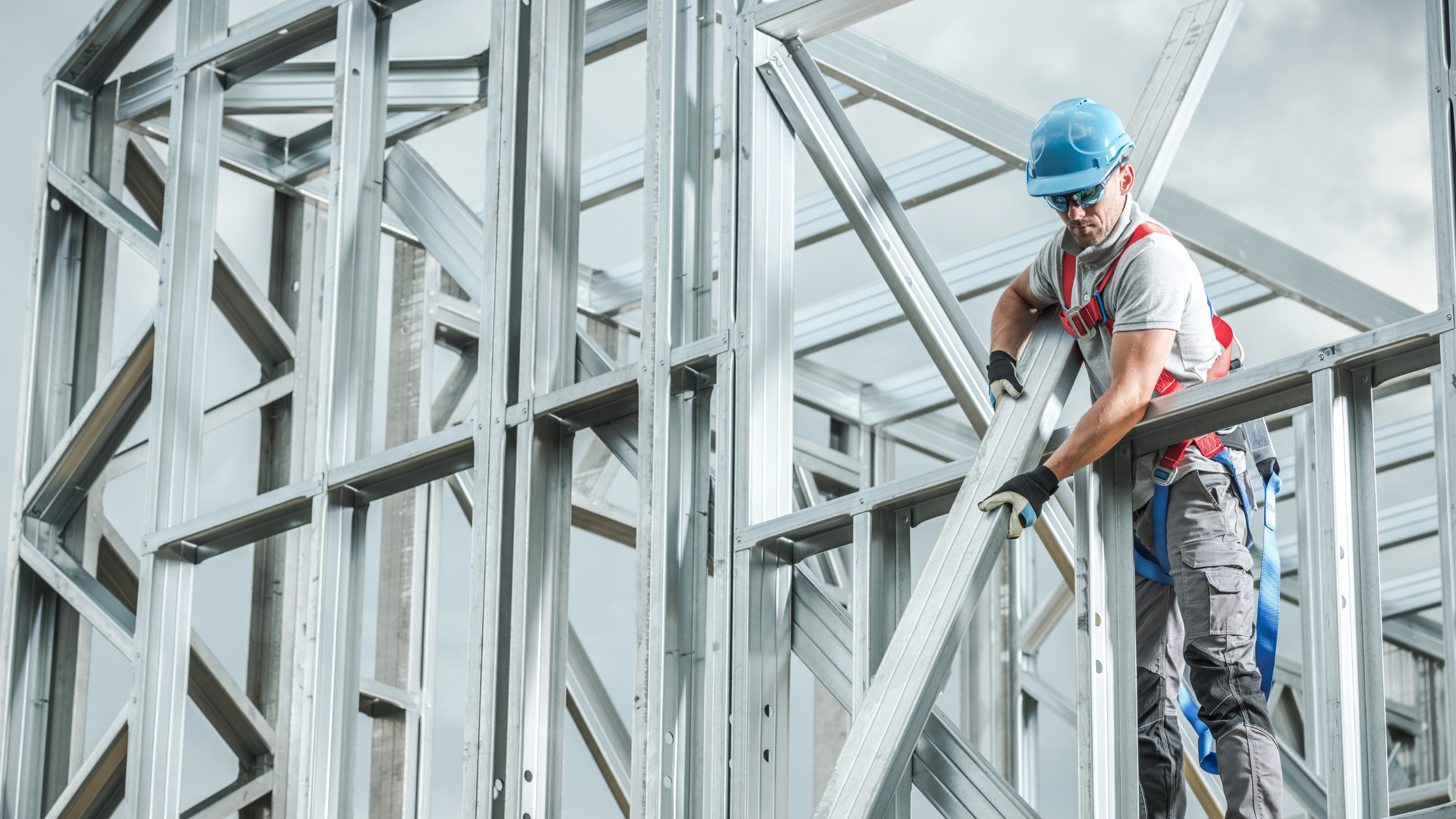
Working at heights is a routine part of construction work, from roofing and structural steel installation to scaffolding and aerial lift operations. These tasks come with inherent risks, making fall protection and safety planning a must-have on every jobsite. This guide helps you understand the key hazards, safety requirements, and equipment and training needed to keep crews safe and protected and keep projects on track.
Why safety when working at heights matters
Working at heights remains one of the most dangerous aspects of construction. Falls from heights consistently rank among the leading causes of serious injuries and fatalities on construction sites.
According to the Occupational Safety and Health Administration (OSHA), falls are the leading cause of death in the construction industry. OSHA’s data confirms that 421 construction workers lost their lives to falls in 2023, accounting for almost 40% of all construction fatalities in the United States. Other research in the field repeatedly recognizes this same pattern. The CDC has also found that falls from roofs, ladders, and scaffolding remain a major reason for workplace deaths in construction.
The consequences extend far beyond worker injuries. A fall incident can shut down an entire project while investigations take place. Crews may be on temporary shutdown for hours or days, and contractors also face schedule delays. Apart from this, there are also legal and regulatory implications. Injuries or fatalities resulting from failing to follow safety standards can lead to fines, higher insurance costs, and damage to a company’s reputation. In some cases, it can even lead to legal action.
Understanding the risks of working at heights
Working at heights refers to any task performed at a height where a worker could fall from one level to another. That includes many common construction activities.
Examples include:
- Climbing ladders
- Working on scaffolding platforms
- Installing roofing systems
- Operating aerial lifts
- Erecting structural steel
- Performing maintenance on elevated structures
Even falls from a single story can lead to serious injuries. A fall from only a few feet can cause fractures, head injuries, or spinal trauma.
Several factors frequently contribute to fall incidents:
- Unprotected edges are one of the most common hazards. Workers near open sides of roofs or floor openings may not have guardrails or fall protection systems installed.
- Improper ladder use also causes many incidents. Ladders that are not secured properly or positioned on uneven ground can shift suddenly.
- Misuse of fall protection equipment can create problems when workers use it incorrectly. Harnesses that are not tied off properly or fit incorrectly can be rendered useless in the event of a fall. Anchor points that are not rated for fall protection can also fail during a fall.
- Surface conditions also play a role. Wet surfaces, loose debris, and ice make it harder for workers to maintain a stable footing.
- Weather conditions introduce another layer of risk. Strong winds, rain, or freezing temperatures increase the chance of slips and loss of balance.
These hazards affect more than individual workers. When falls occur, projects often experience delays while investigations take place and safety procedures are reviewed.
Regulations and safety standards
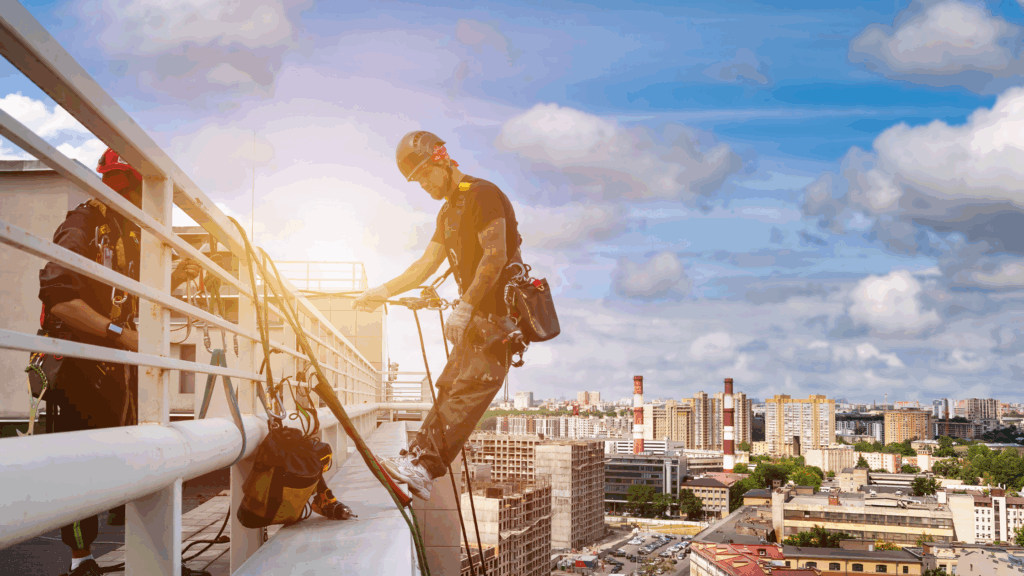
Safety regulations exist to protect workers who perform tasks at height. In the United States, the primary authority overseeing these rules is OSHA.
OSHA regulations state that you must use some form of fall protection whenever workers are working at heights of six feet or more on a construction site. That means employers must ensure they set up fall protection systems where workers are near the edge of a surface, near a hole in the floor, or on an elevated platform. These systems can be guardrails, safety nets, or even personal fall-arrest systems.
Supervisors and site managers play a major role in maintaining compliance. They are responsible for ensuring that workers receive training, that equipment is inspected regularly, and that hazards are addressed before work begins.
Failing to comply with fall protection standards can lead to serious consequences. OSHA regularly issues citations and fines when companies fail to protect workers from fall hazards. Beyond financial penalties, violations can damage a company’s reputation and increase insurance costs.
Planning for working at heights
Preventing fall incidents starts before work begins. Pre-job hazard assessments help crews identify potential risks tied to elevated work areas. Supervisors evaluate jobsite conditions and determine where fall hazards exist. Many contractors now use digital safety management platforms like SiteDocs to organize hazard assessments, safety documentation, and inspection records in one place. Tools like this help crews track compliance with safety regulations and ensure required procedures are completed before work at height begins.
Once hazards are identified, teams can apply a hierarchy of controls. The safest approach eliminates the need to work at height altogether. Some tasks can be performed from ground level using equipment or prefabricated components.
When elimination is not possible, physical barriers provide the next level of protection. Guardrails and barriers can prevent workers from reaching exposed edges.
If those options cannot remove the risk, fall protection systems become necessary. Harnesses, lanyards, and anchor points help stop workers from striking the ground if they fall. Each project should include a site-specific safety plan that outlines how crews will manage fall hazards.
Essential fall protection equipment
Several types of safety equipment help protect workers performing elevated tasks:
- Personal fall-arrest systems remain among the most widely used solutions. These systems include harnesses connected to anchor points using shock-absorbing lanyards or retractable lifelines.
- Harnesses distribute the force of a fall across the body. A properly fitted harness prevents severe injury in the event of a fall.
- Guardrails provide another important layer of protection. These barriers are installed around elevated work areas to prevent workers from reaching open edges.
- Safety nets are sometimes installed beneath high work areas to catch workers if fall protection systems fail.
- Anchor points are the backbone of fall protection systems, crucial for keeping workers safe from the forces that act during a fall. These anchors need to be strong enough to support more than just their own weight. They need to be strong enough to withstand the shock of someone actually falling.
Regular inspection of safety equipment is essential. Damaged harnesses, frayed straps, and rusty anchor points can make a difference between life and death. Workers must also know how to use this equipment correctly. If they don’t know how to set up the equipment properly, you can bet it won’t do much to keep them safe.
Safe use of equipment: ladders, lifts, and scaffolding
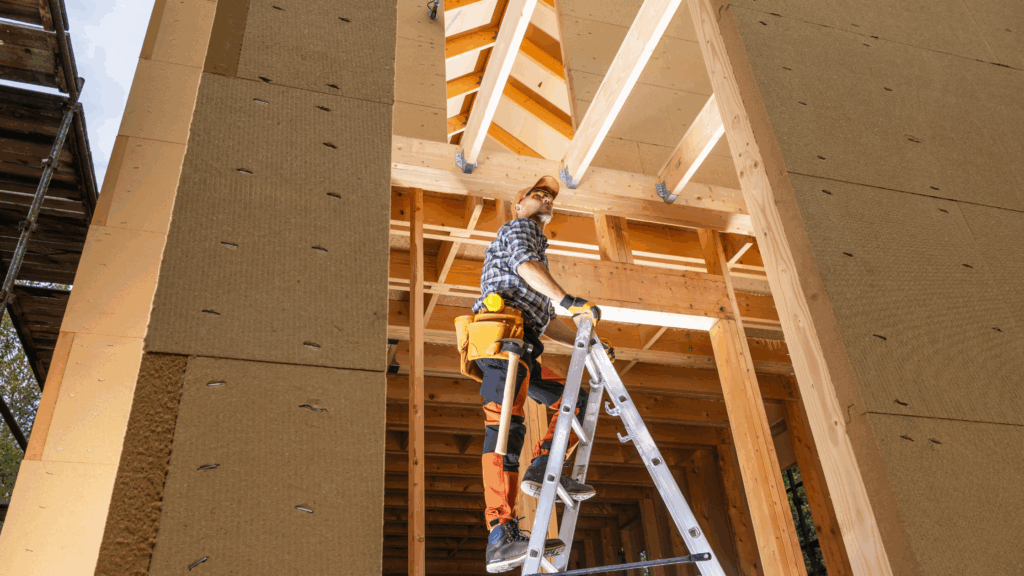
Many fall incidents occur because equipment is used incorrectly. Ladders should be placed on stable ground and secured at the top whenever possible. The base of the ladder must be set far enough from the structure to maintain proper climbing angles, and workers should always maintain three points of contact while climbing.
Scaffolding systems require proper assembly and inspection. Guardrails and toeboards must be installed when scaffolds exceed certain heights. Aerial lifts require specific training before workers can operate them. Operators must wear fall protection harnesses when working from boom lifts.
Ground stability is also important when positioning lifts and scaffolding. Soft or uneven ground can cause equipment to tip. Workers should also remain aware of overhead hazards such as power lines or suspended loads when operating elevated equipment.
The importance of training and worker competency
Formal training plays a major role in preventing fall incidents. Workers must understand how to recognize fall hazards before beginning elevated work. Training programs often cover hazard identification, fall protection systems, proper equipment use, and safe work procedures. Workers also learn how to inspect fall protection equipment before use.
Emergency procedures are another important part of training. Crews must know what to do if a fall occurs or if a worker becomes suspended in a harness. They also must know who to contact in case of an emergency. Refresher training sessions help reinforce safety practices. Toolbox talks provide quick reminders that keep fall protection procedures fresh in workers’ minds.
Training should also adapt to changes in equipment or jobsite conditions.
Emergency preparedness
Even with strong safety programs, incidents can still occur. Emergency rescue plans help crews respond quickly if a worker falls or becomes suspended in a harness. Workers should know who to contact in an emergency and where rescue equipment is located. Rescue procedures must be practiced before an incident occurs. Delayed rescue can lead to suspension trauma when a worker remains hanging in a harness for extended periods. In severe cases, circulation problems and loss of consciousness can occur within minutes, which is why rescue planning is a critical part of any working-at-heights program.
An emergency rescue plan for construction sites—and any job that requires working at heights—should clearly outline how the crew will respond in the event of an accident. Every worker on the site should understand the steps involved and who is responsible for carrying them out.
A working-at-heights rescue plan should include:
- Emergency contacts: A list of supervisors, site safety personnel, and trained rescue responders who can coordinate the response.
- Emergency phone numbers: Key numbers should be clearly posted and easily accessible, including 911, site supervisors, project managers, and first-aid responders.
- Communication procedures: Crews should know how to report an incident immediately. This may involve radios, cell phones, or a site alarm system, depending on the project.
- Assigned responsibilities: Each crew member should understand their role during an emergency. One person may call emergency services, while another retrieves rescue equipment or secures the area.
- Rescue equipment: Equipment such as ladders, aerial lifts, rope rescue kits, and descent devices should be available and readily accessible to crews.
- Rescue procedures: Step-by-step instructions for safely lowering or retrieving a suspended worker. These procedures should match the type of fall protection system used on the site.
- First aid response: Workers trained in first aid should be ready to assist once the worker is safely on the ground.
Rescue plans should be reviewed during safety meetings and toolbox talks to keep workers familiar with the procedures. Practicing rescue drills helps crews identify gaps in the plan before a real emergency occurs. When everyone understands the process, response times improve, and the risk of serious injury decreases.
First aid training can also help workers respond effectively while waiting for emergency services. Preparation makes a significant difference during high-risk situations.
Building a strong safety culture
A safe jobsite depends on cooperation from everyone on the project. Workers should feel comfortable reporting hazards without fear of discipline or retaliation. Supervisors play a major role by setting expectations and modeling safe behavior.
Regular safety meetings give crews a chance to review incidents and identify ways to prevent similar situations in the future. Safety culture grows when everyone on the site understands that protecting workers is a shared responsibility.
Final thoughts
Working at heights will always be part of construction work. Crews install roofing systems, operate lifts, and build structures far above ground level every day. Those tasks carry serious risk when fall hazards are ignored. Proper planning, reliable equipment, strong training programs, and clear safety procedures help reduce the chance of serious incidents.
If you want more practical safety insights and construction industry guidance, subscribe to the Under the Hard Hat newsletter and stay informed about the topics that affect workers on today’s jobsites.